
"Chinese parasol tree"
50000 article(s) found

The growth environment and growth process of coffee trees introduce why Chinese people like Starbucks
Coffee beans are fresh and green coffee raw beans, which are obtained by removing red pulp, peel and silver skin from coffee fruit. The structure of coffee fruit is composed of outer skin, pulp, endocarp, silver skin and seeds. The shape is oval, usually the fruit of coffee is composed of two oval seeds opposite each other, and the other side is flat, so it is called flat bean, but it is also made up of

Coffee culture with Chinese characteristics
At the beginning of the 20th century, missionaries from France planted Chinese mainland's first coffee tree in Zhukula, Yunnan Province. According to historical records, coffee was first planted in Taiwan in 1884, which opened the prelude to the development of coffee in China. In the following nearly a hundred years, coffee was only planted in the vast territory of China. However, the development of coffee cultivation and consumption in China in recent years
Chinese Coffee History talk about Chinese Coffee History
According to historical records, coffee trees were first planted in Taiwan in 1884, and coffee cultivation in mainland China began in Yunnan. In 1902, a French missionary named Tian introduced seeds from Yinggong County in Binchuan County, Yunnan Province. it was successfully planted in a place called Zhu Kula, which is located on the bank of the Yushan River, a tributary of the Jinsha River. The commercial cultivation of coffee in Yunnan began in 1985, but its development is slow.
Nestle coffee, Chinese coffee, Yunnan coffee, small grain coffee, Katim's Arabica hybrid.
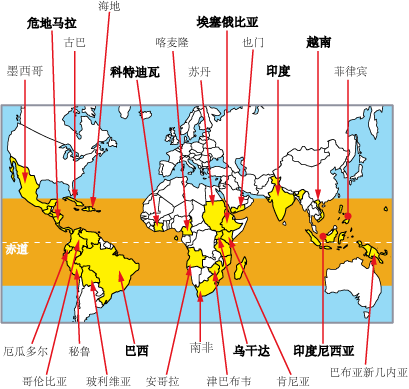
Coffee trees need high altitude, tropical climate and fertile soil to grow the best coffee beans. Such climatic conditions on earth surround the equator, about 25 degrees north latitude to 30 degrees south latitude, this zone, commonly known as the golden coffee belt. When it comes to coffee in the world, let's talk about Chinese coffee first. According to the above definition, China can grow coffee despite its vast territory and abundant resources.
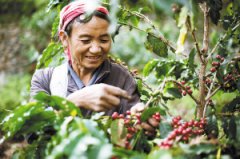
Yunnan Coffee and Chinese Coffee Market
Coffee trees need high altitude, tropical climate and fertile soil to grow the best coffee beans. Such climatic conditions on earth surround the equator, about between 25 degrees north latitude and 30 degrees south latitude. This zone, commonly known as the golden coffee belt, belongs to tropical and subtropical regions and is technically called coffee belt. When it comes to coffee in the world, let's talk about Chinese coffee first.

Two pictures of coffee family tree in Chinese and English to learn more about coffee variety system.
Coffee variety is one of the three elements of fine coffee variety, altitude and processing, among which coffee variety is one of the most important elements. Understanding coffee family tree is a necessary knowledge to learn fine coffee. In fact, there are hundreds of coffee tree species on the earth, nearly 100 in Arabica alone, but when it comes to fine coffee, only Arabica beans can be called.

The Development of Coffee in China the Biography of Coffee in Zhukula Village, Yunnan Province
When it comes to the history of Chinese coffee, we have to mention Yunnan Dali Zhukula Coffee, which plays a vital role in the history of Chinese coffee. The ancient coffee forest in Zhukula Village is a unique variety of small-grain coffee in Yunnan. It is very rare and of excellent quality. It can be called a living fossil of Chinese coffee. We went to explore the century-old coffee legend of Zhukula village. Zhu Kula, located in Yunnan Province
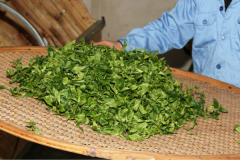
Which is more advanced among Phoenix single fir, Chinese cabbage or narcissus? Which tastes better?
Single fir tea tree is a biological term. Single means single, and fir means tree or shrub. According to Wikipedia, single fir refers to the form of tea trees. Most tea trees emerge from the ground to form a cluster of branches; however, a rare Dan clump variety appears as a single trunk with higher branches. Once a tea tree is found to have a unique flavor, it will be taken down.
Maple syrup in coffee flavor spectrum
Chinese seldom drink pure maple syrup. Here is a brief introduction. When you are an exotic sketch, you may be able to import some of your coffee shop as a collection in the future. If the benefits are spread equally to every American, the average person consumes 3 ounces of maple syrup a year. But considering that only 6.4% of Chinese are in the habit of eating maple syrup (2.5% in 2005).
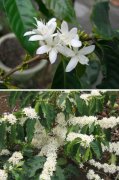
Chinese Academy of Sciences of Coffee Information promotes the Development of Coffee Industry in Yunnan
On January 26, the three-day Pu'er Coffee Culture Festival ended perfectly with a trip to Pu'er Coffee. During this Chinese coffee event, the high-quality coffee demonstration park in Manxieba, Nanping Town, Simao District, Yunnan Province, attracted people from all over the world to participate in the event. As the first stop of the Pu'er coffee tour, Manheba boutique coffee farm ushered in the world coffee leader, SCAA (American boutique)
The Legend of Coffee in Zhukula Village, Dali, Yunnan Province
When it comes to the history of Chinese coffee, we have to mention Yunnan Dali Zhukula Coffee, which plays a vital role in the history of Chinese coffee. The ancient coffee forest in Zhukula Village is a unique variety of small-grain coffee in Yunnan. It is very rare and of excellent quality. It can be called a living fossil of Chinese coffee. In today's program, we will explore the century-old coffee legend of Zhukula Village. Zhu
Coffee Culture the Biography of Coffee in Zhukula Village of Yunnan Province
When it comes to the history of Chinese coffee, we have to mention Yunnan Dali Zhukula Coffee, which plays a vital role in the history of Chinese coffee. The ancient coffee forest in Zhukula Village is a unique variety of small-grain coffee in Yunnan. It is very rare and of excellent quality. It can be called a living fossil of Chinese coffee. We went to explore the century-old coffee legend of Zhukula village. Zhu Kula, located in Yunnan Province

Common sense of Coffee Culture Coffee Legend of Zhukula Village in Yunnan Province
When it comes to the history of Chinese coffee, we have to mention Yunnan Dali Zhukula Coffee, which plays a vital role in the history of Chinese coffee. The ancient coffee forest in Zhukula Village is a unique variety of small-grain coffee in Yunnan. It is very rare and of excellent quality. It can be called a living fossil of Chinese coffee. We went to explore the century-old coffee legend of Zhukula village. Zhu Kula, located in Yunnan Province
History of Coffee in China the Legend of Coffee in Zhukula Village, Dali, Yunnan
When it comes to the history of Chinese coffee, we have to mention Yunnan Dali Zhukula Coffee, which plays a vital role in the history of Chinese coffee. The ancient coffee forest in Zhukula Village is a unique variety of small-grain coffee in Yunnan. It is very rare and of excellent quality. It can be called a living fossil of Chinese coffee. In today's program, we will explore the century-old coffee legend of Zhukula Village. Zhu
The History of Coffee in China the Biography of Coffee in Zhukula Village, Yunnan Province
When it comes to the history of Chinese coffee, we have to mention Yunnan Dali Zhukula Coffee, which plays a vital role in the history of Chinese coffee. The ancient coffee forest in Zhukula Village is a unique variety of small-grain coffee in Yunnan. It is very rare and of excellent quality. It can be called a living fossil of Chinese coffee. We went to explore the century-old coffee legend of Zhukula village. Zhu Kula, located in Yunnan Province

Comparison of planting environment of small-leaf tea in China and big-leaf tea in Assam, India
Although the growth of tea from bitter waxy leaves on shrubs to tea in pots seems to be absurd, tea makers actually followed the basic steps invented by Chinese farmers in the 18th century. Tea is part of the genus Camellia. There are three main varieties used to produce tea: Chinese lobular tea (sinensis), Assam tea (assamica) and Cambodian tea (cambodi)

Investment Analysis and Prospect Forecast of Chinese Coffee Industry
Coffee, tea and cocoa are called the three major drinks in the world. Coffee tree is a small evergreen tree of Rubiaceae. Coffee for daily consumption is made from coffee beans combined with various cooking utensils, and coffee beans refer to the nuts in the fruit of coffee trees, which are then roasted by appropriate roasting methods.
The Biography of Coffee in Zhukula Village, Yunnan Province
When it comes to the history of Chinese coffee, we have to mention Yunnan Dali Zhukula Coffee, which plays a vital role in the history of Chinese coffee.
Chinese coffee
According to historical records, coffee trees were first planted in Taiwan in 1884, and coffee cultivation in mainland China began in Yunnan. In 1902, a French missionary named Tian introduced seeds from "Yingong" in Binchuan County, Yunnan Province. it was successfully planted in a place called Zhu Kula, a tributary of the Jinsha River.